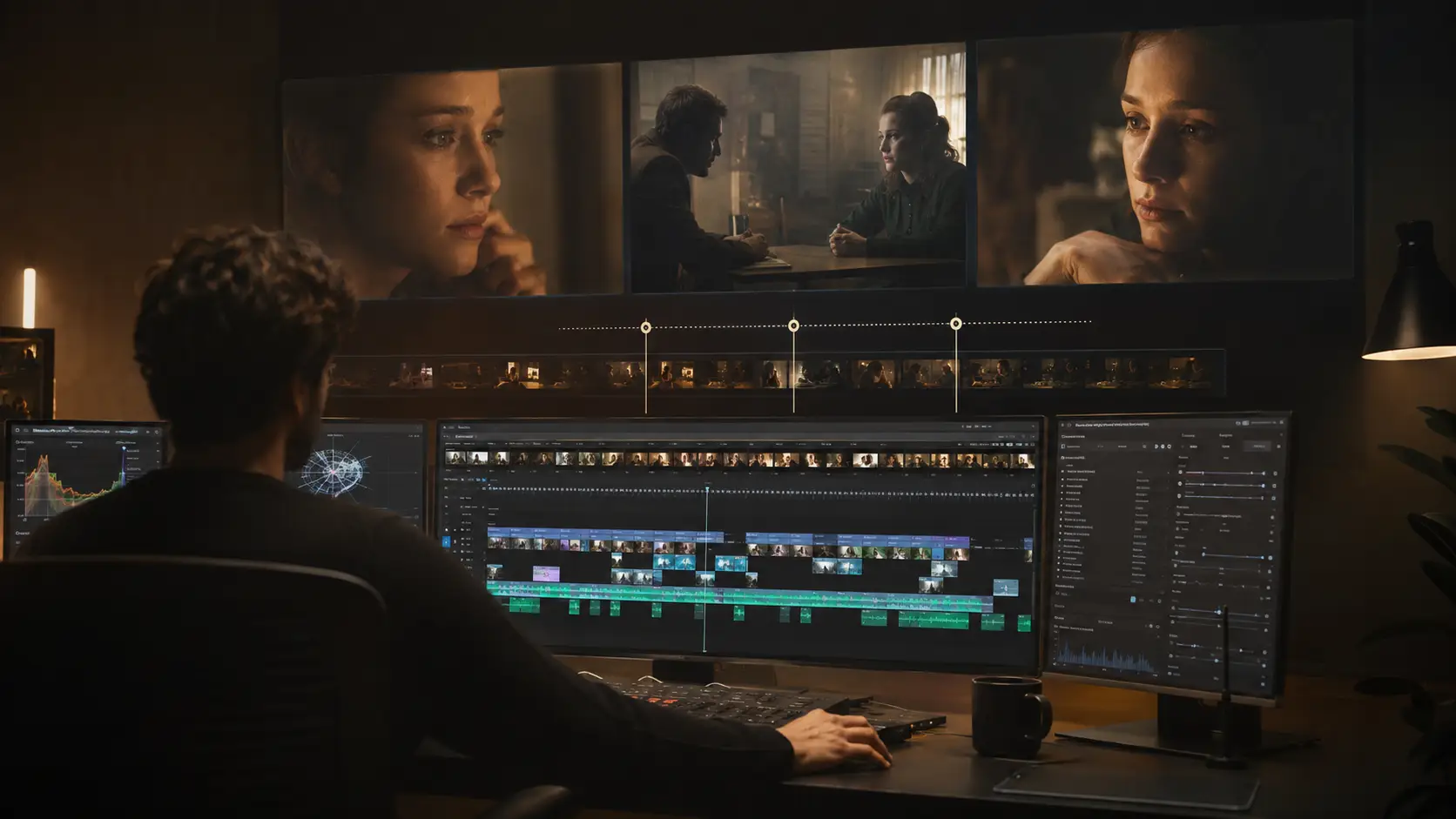
Editing is often described as the process of cutting footage. Technically that is true. Creatively it is incomplete.
A cut controls when the audience receives information, how long they stay with a reaction, whose point of view feels dominant and whether a moment lands as tension, tenderness, discomfort or release.
The invisible decision
Two edits can use the same footage and still create very different emotional interpretations. Cutting away early can reduce discomfort. Holding a reaction can make it heavier. Showing an answer before a question has had time to register can remove suspense.
That is why I treat editing as part of storytelling rather than a separate finishing step. The timeline is where performance, story structure, sound and pacing start negotiating with each other.
A simple review
When a scene is not working, I ask three questions: What should the audience know at this exact moment? Whose emotion should they be following? What changes if the shot stays one second longer?
The best cut is not always the most visible one. Often it is the decision the audience never notices—but still feels.